


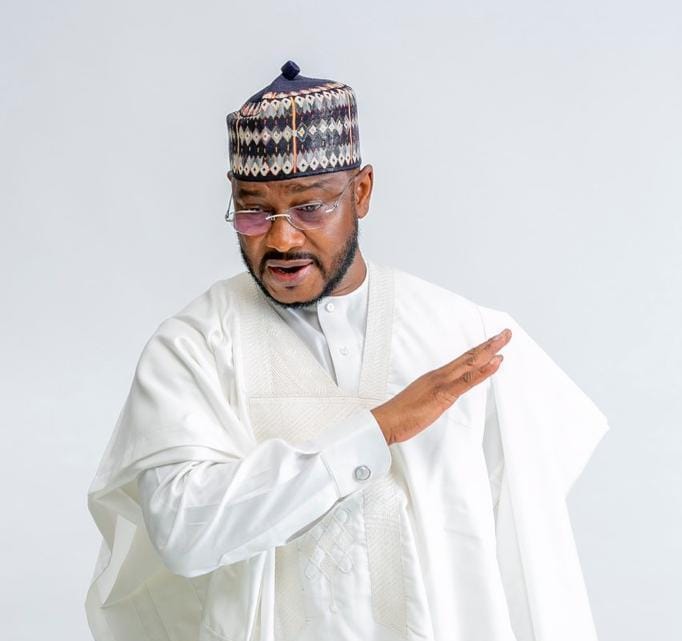

The Centre for Responsible Governance (CRG) has commended Zamfara State Governor, Dauda Lawal, for what it described as a “quiet but far-reaching reform agenda” that is steadily redefining governance and restoring public trust in a state long associated with insecurity and institutional failure.

In a statement issued on Sunday and signed by its Spokesman, George Obande, the Centre said Governor Lawal inherited not merely a struggling state but one in “urgent need of rescue” after years of systemic decay, abandoned public institutions and weakened confidence in government.
According to the Centre, less than three years into his administration, Lawal has pursued a deliberate governance reset anchored on structural reform rather than populist gestures, with measurable impact across security, education, healthcare, infrastructure and economic management.
“Zamfara was for decades a textbook example of how governance failure can trap citizens in cycles of insecurity, poverty and lost opportunity. What the current administration has undertaken is not cosmetic change, but institutional repair,” the statement said.
Students’ Case Symbolises Reform Philosophy
CRG identified as a defining moment of the administration Governor Lawal’s intervention in the long-abandoned case of 50 Zamfara students whose university results had been withheld for nine years due to unpaid tuition fees accumulated under previous governments.
The Centre noted that by settling the outstanding liabilities, securing the release of the students’ results and restoring their academic futures — including those of First Class and Second Class Upper graduates — the governor sent a powerful signal about his administration’s priorities.
“That intervention went beyond compassion. It was a moral and governance statement that the future of Zamfara’s youth would no longer be sacrificed to administrative failure,” CRG said, describing the action as a landmark achievement in human capital development.
Security Reset Through Institutional Reform
On security, the Centre observed that Governor Lawal approached Zamfara’s long-running banditry crisis as a governance challenge requiring institutional correction, rather than short-term emergency responses.
The administration strengthened collaboration with federal security agencies while establishing Community Protection Guards (CPGs) to complement conventional forces. According to CRG, these community-rooted units have improved intelligence gathering, response time and trust between residents and security operatives.
The creation of the Zamfara State Security Trust Fund, the Centre said, further institutionalised security financing by replacing ad-hoc interventions with a structured and accountable funding mechanism.
“While challenges persist, the direction has clearly shifted. Rural communities are reopening, attacks are being disrupted, and citizens are gradually re-engaging with the state as a protector,” the statement added.
Education Declared a Strategic Priority
CRG said the governor’s declaration of a state of emergency in the education sector marked a turning point after years of neglect that left schools dilapidated and students stranded.
Beyond resolving the Crescent University case, the Centre cited the clearing of WAEC and NECO fee backlogs, renovation and construction of schools, expansion of scholarships and bursaries, and initiatives to reduce the number of out-of-school children.
“Education in Zamfara is no longer an afterthought. It is being treated as the foundation of long-term security, productivity and prosperity,” Obande stated.
Healthcare Reforms Gain Momentum
The Centre also highlighted reforms in healthcare, noting the rehabilitation and equipping of hospitals and clinics, improved welfare for health workers, and expanded access to medical services.
The construction of a 200-bed hospital in Talata Mafara, alongside free medical outreaches providing surgeries and specialist care in underserved communities, was described as repositioning Zamfara as a rising performer in primary healthcare delivery in the North-West.
Infrastructure as an Economic Enabler
On infrastructure, CRG said the Lawal administration has treated projects as tools for safety, commerce and dignity rather than political trophies.
The Centre cited the Urban Renewal Project, upgrades to roads and drainage systems, improvements around the Gusau International Airport, construction of a modern stadium, and expansion of street lighting across urban centres as initiatives improving mobility, security and economic activity.
Economic Discipline and Social Repair
According to CRG, the clearing of inherited salary and pension arrears restored morale in the public service, while the Rescue Budget 2.0 redirected spending towards capital investments in critical sectors.
Skills acquisition programmes, youth and women empowerment schemes, and targeted social interventions were described as efforts aimed at restoring livelihoods rather than promoting short-term handouts.
The CRG also drew attention to ongoing investments in sports infrastructure, noting that a modern sports stadium is currently under construction to promote sports development and youth engagement in Zamfara State.
According to the Centre, the project was awarded to a world-class contractor in line with the administration’s emphasis on quality and durability, with commissioning expected by March. The facility is expected to serve as a platform for talent development, community engagement and sports-driven economic activity.
A Quiet, Reformist Governance Style
The Centre concluded that Governor Lawal’s defining strength lies in a restrained, consultative and results-driven leadership style focused on rebuilding institutions and strengthening processes.
“In a political culture often driven by spectacle, this administration has demonstrated that reform is quieter, but far more enduring,” the statement said.
While acknowledging that Zamfara still faces challenges, CRG maintained that the state’s trajectory has clearly shifted.
“Zamfara is no longer where it was. The freeing of abandoned students, the restructuring of security, the revival of education and healthcare, and renewed economic discipline together tell the story of a state undergoing a deliberate reset,” Obande said.
The Centre concluded that Governor Dauda Lawal’s reform-oriented leadership is gradually rewriting Zamfara’s future and offering a model of how disciplined, empathetic governance can transform even the most challenged subnational states.
In closing, the Centre for Responsible Governance stated that its commentary on Zamfara is consistent with its statutory role as an independent governance watchdog.
“Assessment of public institutions and elected office holders forms a core part of the Centre for Responsible Governance’s mandate. Our responsibility is to objectively evaluate leadership performance, policy direction and institutional reform wherever they occur, and to highlight models that strengthen accountability and public trust,” the statement said.
According to the Centre, such assessments are aimed not at political endorsement, but at encouraging reform-oriented leadership and promoting governance standards that can be replicated across states and sectors.
Centre for Responsible Governance, (CRG)
Email: crgng06@gmail.com
