


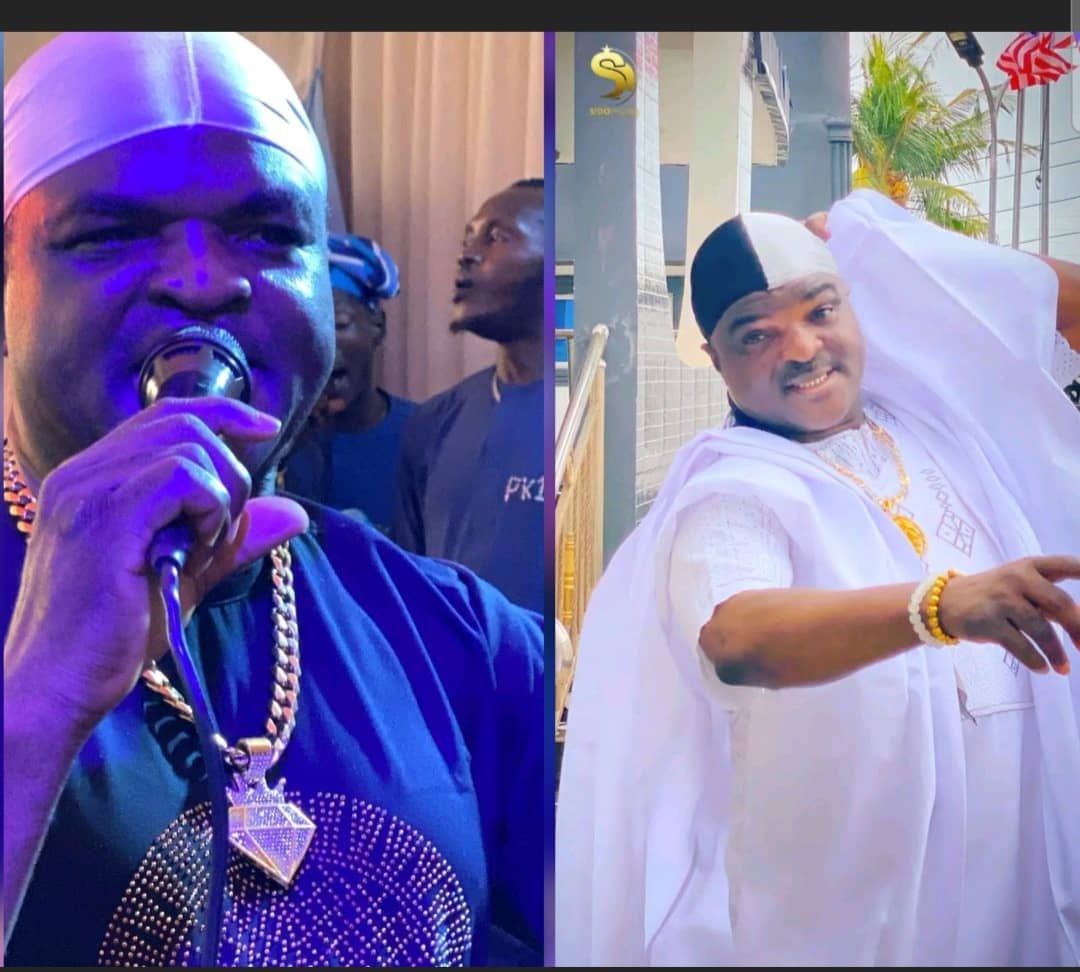
I started listening to Fuji music in the 80s, though I didn’t understand most of the lyrics at first. The one that really caught my attention was when Baba Awolowo died—some Fuji legends like GKA and SAB mentioned him in their albums. I used to sing along with them.


Later, I came across Chief Adewale Ayuba. His Bubble album had the famous line, “Omoge olosan gbewa, aidun osan la mu mejola.” I listened to it countless times before I finally understood. Similarly, Sir Shina Peters sang, “Mori olomoge to duro sepe, sepe fugue 8, oronbo aya re odun osan loo.” Around that time, I was also hearing Wasiu Ayinde’s Talazo.
Through my uncle, I also learned about Baba Oko. Back then, I used to watch OGTV, then NTA, and later Galaxy Ibadan, where all these Fuji musicians were often played. The words “omoge” and “osan” kept ringing in my mind.
By the 90s, I heard of Obesere. His first album didn’t catch my interest, but by his second album—and especially from some live tapes I got from my dad—I began to like his style. His music taught lessons, like “What guys should do when they meet a lady: don’t be shy, don’t be too forward.” His songs were full of comedy, and I often laughed listening to them. One line that really challenged me was, “Egbe nla lo je e fun okunrin ti ko le ba obinrin soro.” It inspired me greatly.
Over the years, Agbaakin Abass Akande Obesere’s lyrics have been so useful to many of us. I got deeply into his live cassette plays, where he mixed comedy with Yoruba expressions. Lines like “Owo ko ni Ife, ma te e lorun pelu kini” and “Ri ro ni ti eniyan, sise ni ti Oluwa, omode yii to njo, oti wunmi tele tele” carried wisdom and humor that stayed with me.while others taught lessons on confidence, love, and life.
Over time, Agbaakin Abass Akande Obesere’s songs, rich in comedy and Yoruba proverbs, became a source of inspiration and joy, shaping the way I listened to Fuji music.
Fujimusic legend !!

Nice story