


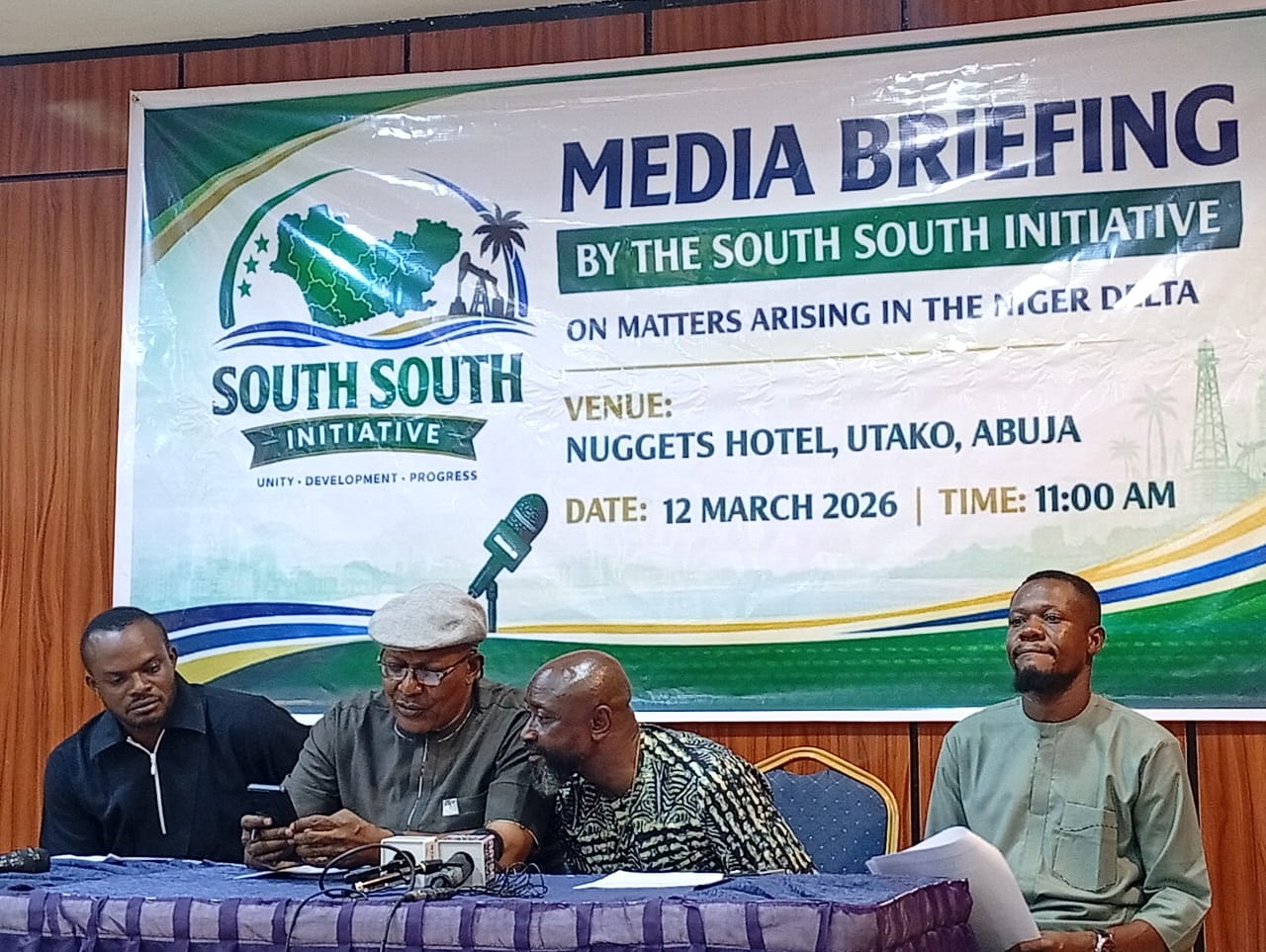


A coalition of stakeholders under the South South Initiative has called on President Bola Ahmed Tinubu to retain the current pipeline surveillance framework in the Niger Delta, warning that dismantling the system could reverse the significant gains recorded in Nigeria’s oil production and security in the region.
The group made the appeal during a press briefing held on March 12, 2026, where it addressed what it described as growing misinformation surrounding oil pipeline protection contracts currently under scrutiny at the National Assembly. According to the group, Nigeria’s crude oil infrastructure remains the backbone of the country’s economy, and protecting it is critical to national revenue and economic stability.
Citing figures from the Nigeria Extractive Industries Transparency Initiative (NEITI), the group said Nigeria lost approximately 619.7 million barrels of crude oil valued at about $46.16 billion between 2009 and 2020 due to pipeline vandalism, oil theft and illegal refining activities in the Niger Delta. The crisis intensified in 2022 when an additional 36.69 million barrels were reportedly lost in a single year, pushing the oil sector to the brink of collapse.
At the height of the crisis, the country’s effective crude oil output reportedly dropped to around 700,000 barrels per day, far below Nigeria’s OPEC quota and installed production capacity of more than two million barrels per day. The scale of the losses was highlighted by Nigerian investor Tony Elumelu, whose oil assets producing about 58,000 barrels per day reportedly lost up to 97 percent of output to theft syndicates. International oil companies, including Chevron and Shell, responded to the deteriorating situation by declaring force majeure on certain operations and accelerating plans to divest from onshore assets in the Niger Delta.
The group said the situation began to improve after the Federal Government adopted a community-driven pipeline protection strategy that engaged indigenous surveillance firms with strong local networks and knowledge of the terrain. Among the companies operating under this arrangement are Tantita Security Services, Maton Engineering Services and other regional surveillance contractors deployed across different pipeline corridors in the Niger Delta.
According to the South South Initiative, the strategy integrates host communities directly into the protection of critical oil infrastructure, creating legitimate employment opportunities for youths while discouraging involvement in criminal activities. The group stated that in the early phases of the surveillance operations, more than 4,000 illegal refining sites and crude oil theft canals were uncovered and dismantled across the region, while hundreds of illegal pipeline tapping points were identified and sealed. Several major trunk pipelines previously shut down due to vandalism were also restored to operation.
These efforts, the group said, disrupted entrenched criminal networks that had operated across the Niger Delta for years and contributed to a gradual recovery in Nigeria’s oil production. According to the figures presented at the briefing, crude output rose steadily from crisis levels of about 700,000 barrels per day to approximately 1.7 million barrels per day, bringing Nigeria closer to its production targets under the Organization of the Petroleum Exporting Countries (OPEC).
The increase in production has translated into billions of dollars in additional revenue for the country, improved export volumes and renewed investor confidence in Nigeria’s upstream oil sector. The Nigerian National Petroleum Company Limited (NNPC Ltd.) also returned to profitability after years of financial losses, partly due to improved operational stability and reduced crude theft.
The group noted that the recovery has been acknowledged internationally, pointing out that OPEC’s Monthly Oil Market Reports have consistently documented Nigeria’s steady production rebound since 2022 and linked the improvement to enhanced pipeline security and the restoration of previously shut-in facilities. Chevron Nigeria Limited has also publicly acknowledged the improved operating environment in the Niger Delta and recently announced new exploration successes while reaffirming its long-term investment commitment to Nigeria.
The South South Initiative also highlighted the inclusive structure of the pipeline surveillance arrangement. It said that when the pipeline protection contract was first awarded to Tantita Security Services, its leadership convened a meeting in Oporoza, the traditional headquarters of the Gbaramatu Kingdom in Delta State, bringing together community leaders from across the Niger Delta, from Ondo State to Cross River State. At the meeting, surveillance responsibilities were distributed across different ethnic groups and communities along the pipeline routes, with coordinators and subcontractors appointed from various regions to ensure broad participation.
According to the group, this arrangement transformed host communities into stakeholders in protecting national assets while promoting peace and economic engagement among local youths. It expressed concern that individuals who previously benefited from oil theft and illegal refining operations are now attempting to discredit the surveillance system through misinformation campaigns aimed at destabilising the progress achieved.
The group urged the Federal Government to resist pressure to dismantle the current framework and instead strengthen it. It also suggested that if necessary, the government could establish a high-powered independent panel to verify the claims of improved security, reduced pipeline vandalism and increased oil production linked to the surveillance operations.
Drawing comparisons with other oil-producing countries, the group noted that nations such as Saudi Arabia, Iraq, Russia, Algeria, China and Canada invest heavily in securing their oil infrastructure, while NATO countries maintain a dedicated pipeline network protected by specialised security logistics. According to the South South Initiative, no serious nation leaves the protection of its primary economic resource to chance.
The group warned that dismantling the current surveillance system without a carefully designed alternative could risk returning the Niger Delta to the violent era of militancy and widespread pipeline sabotage that once crippled Nigeria’s oil sector and severely reduced national revenues.
It therefore called on President Tinubu to remain steadfast in protecting the gains achieved in the region and to ensure that policies that have contributed to stability and increased production are sustained. The organisation also urged Nigerians to reject propaganda that could undermine the progress recorded in securing the country’s oil infrastructure.
According to the group, Nigeria is already facing multiple economic and security challenges, and destabilising the Niger Delta at this time would only worsen the country’s fiscal and energy situation. The South South Initiative maintained that protecting the country’s oil resources is a collective national responsibility and called on stakeholders to support policies that promote peace, stability and sustainable development in the Niger Delta.
