

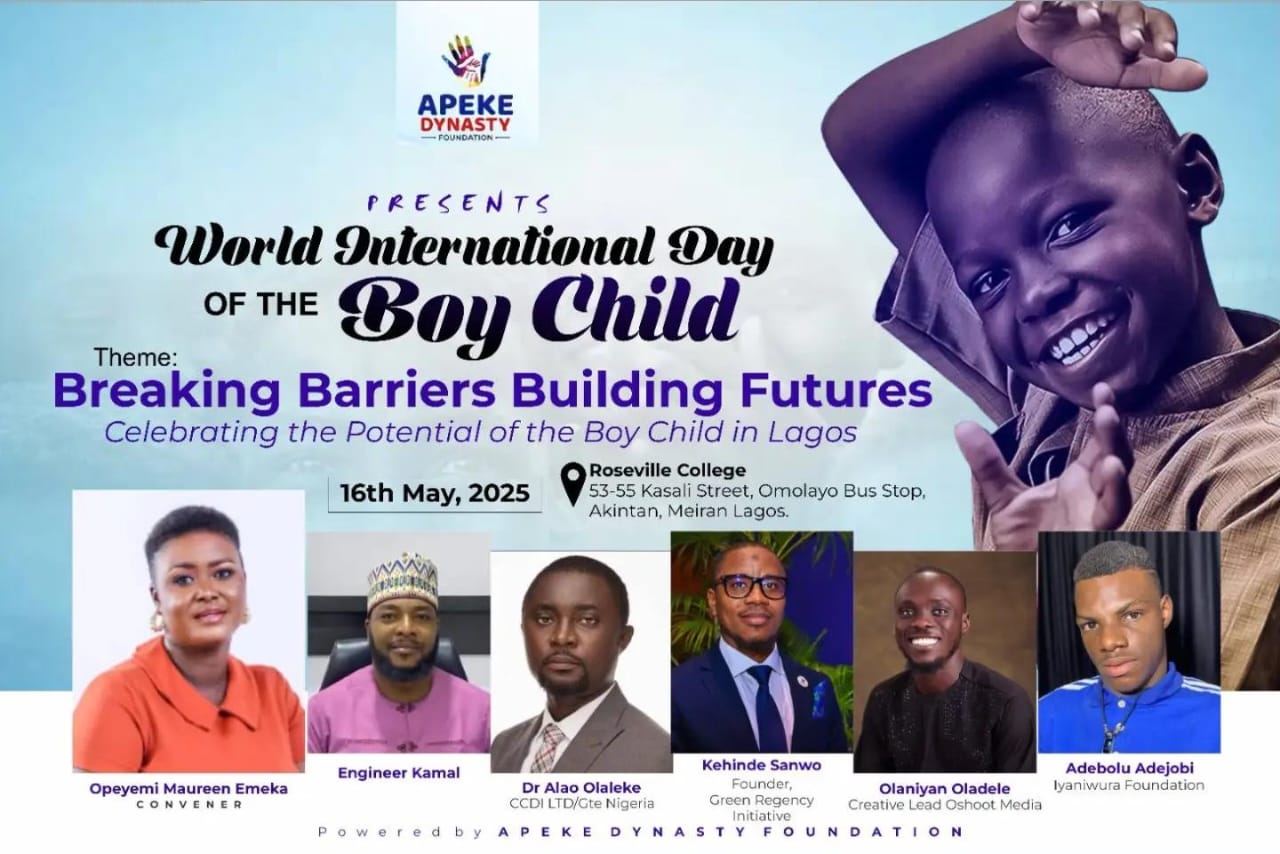

The International Day of the Boy Child was more than just a celebration—it was a powerful call to awaken, inspire, and transform. Hosted by the Apeke Dynasty Foundation, this year’s event, themed “Breaking Barriers, Building Futures: Celebrating the Potentials of the Boy Child in Lagos,” was a life-shaping experience for every boy in attendance.

Engineer Kaml Bello opened the event with a session titled “Taking Engineering as a Career and Mentorship to Shape the Boy Child.” His talk went beyond technical skills; he spoke of courage, vision, and purpose. Through his words, the boys glimpsed a future where they could become innovators and leaders.
Dr. Alao Olaleke followed with a deeply moving session, “Empowering the Boy Child: Breaking Stereotypes and Fostering Emotional Intelligence.” He addressed the often-overlooked emotional struggles boys face, boldly affirming that it’s okay for boys to express emotions—to cry, to speak up, to feel. For many in the room, it was a moment of healing and liberation from the toxic mantra: “You’re a man, tough it out.”
Mr. Kehinde Sanwo delivered a powerful message with his session, “Unchained: Freeing the Boy Child from the Grip of Substance Abuse to Build a Brighter Future.” His words struck a deep chord. As he spoke, you could see realization dawning in the eyes of many boys—some relating through personal battles, others thinking of friends and family. His talk was both a warning and a healing balm.
Adebolu Adejobi built on that momentum, speaking on Peer Pressure and Drug Abuse with honesty and relatability. His delivery resonated deeply, especially when he realized that some boys were already familiar with the substances he warned against. Despite the shock, his words brought hope and clarity, igniting a spark for change.
Yet, the impact of the event wasn’t limited to the speeches.
We witnessed boys networking with one another, exchanging values and insights.
We watched the Boy Scouts exemplify discipline and leadership.
We saw boys who once believed in their limitations leave with a renewed sense of strength and possibility.
In a society where advocacy for the girl child is (rightfully) gaining momentum, we must also remember the boy child. He, too, faces harmful stereotypes, emotional silence, and immense social pressures. This event proved that when we see him, hear him, guide him, and believe in him—he thrives.