


Former Army Chief says education is Africa’s strongest weapon against terrorism, urges governments to prioritise school funding

ABUJA — Former Chief of Army Staff, Lt Gen Tukur Yusufu Buratai (retd), has warned African governments that slashing education budgets to fund military expenditure is self-defeating, declaring that while a bullet can kill a terrorist, only education can eliminate terrorism.
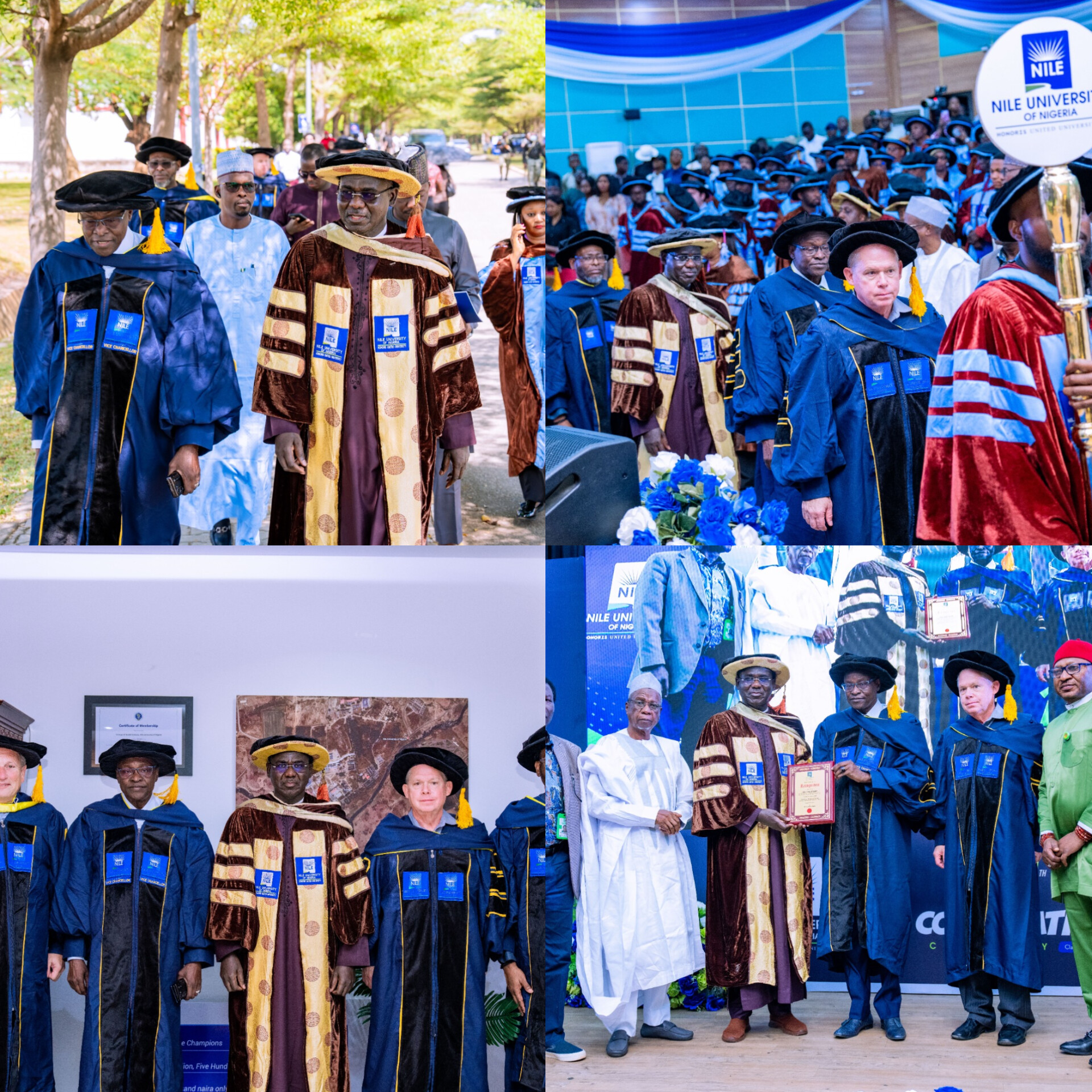
Delivering the 14th Convocation Lecture of the Nile University of Nigeria, Abuja, on Tuesday, November 17, 2026, titled “Nexus Between Education and Security: Implications and Lessons for Sub-Saharan Africa,” Buratai urged policymakers to treat education as core security infrastructure rather than a secondary social sector.
Addressing the Chancellor, Vice-Chancellor Prof. Dilli Dogo, members of the Governing Council, faculty, and the graduating class of 2026, the Chairman of the Tukur Buratai Research Centre argued that the security of any nation is measured not merely by the strength of its armed forces, but by the strength of its classrooms.
“I have spent most of my life in barracks, in training grounds, in the theatre of war. You have spent yours in lecture halls, in libraries, in laboratories,” Buratai told the graduands. “Mine was a rifle. Yours is a pen, a computer, an idea. And I have come to tell you today, from the battlefield of the North-East to the classrooms of the Sahel, that your weapon is more powerful than mine. Because a bullet can kill a terrorist. Only education can kill terrorism.”
A Borno Encounter and the ‘Four-Year Threshold’
Recounting an encounter during the height of the counter-insurgency war in Borno State in 2016, the former army chief recalled meeting a barefoot, 12-year-old boy in a newly liberated community who pointed to the burnt rubble of his school and pleaded in Hausa to return to class.
“Then he said something I have never forgotten. He said, ‘If I do not go to school, they will come back for me’,” Buratai narrated. “He was 12 years old. And he understood what many policymakers in Africa still do not understand: that when a school dies, a terrorist is born.”
Drawing from his years in military command, Buratai introduced a strategic heuristic he termed the “four-year threshold,” noting that children with fewer than four years of schooling are radically vulnerable to insurgent recruitment because they lack basic literacy to interrogate extremist propaganda or secure formal employment. Conversely, the probability of recruitment drops sharply once a child completes over seven years of education.
“What the data show in aggregate, the soldier learns in the specific: a child who cannot read is a child who cannot resist,” he stated.
Sahel as Global Terrorism Epicentre
Painting a stark picture of the security and educational crisis across Sub-Saharan Africa, a region of over 1.3 billion people where more than 60 per cent of the population is under age 25, Buratai cited data from the Global Terrorism Index showing that the Sahel has become the global epicentre of terrorism for the third consecutive year.
While the Sahel accounted for just one per cent of global terrorism-related deaths in 2007, the region recorded nearly half of the 5,582 terrorism deaths worldwide in 2025, following a similar trend in 2024.
He noted that armed groups, including Boko Haram, the Islamic State West Africa Province, Jama’at Nusrat al-Islam wal-Muslimin, and the Islamic State Sahel Province, deliberately target schools rather than treating them as collateral damage.
Citing alarming regional figures, Buratai highlighted:
School Abductions in Nigeria: Over 10 school kidnappings occurred between January 2024 and November 2025, affecting more than 670 children, including the November 2025 abduction of 315 students and teachers from St Mary’s School in Papiri, Niger State.
School Closures: More than 9,000 schools remain shut due to insecurity across Mali, Burkina Faso, and Niger, displacing 3.3 million people.
Regional Attacks: Over 1,100 attacks on education were recorded across seven West and Central African nations between 2024 and 2025, while armed groups in the Democratic Republic of the Congo attacked at least 587 schools between March 2025 and February 2026.
Out-of-School Crisis: Sub-Saharan Africa accounts for 98 million out-of-school children and adolescents globally, with UNICEF warning that funding cuts put over three million more children at risk of dropping out by 2026.
Five Lessons and Policy Recommendations
Buratai warned that while the military can defeat insurgents on the battlefield, force alone cannot build lasting peace without addressing educational exclusion and youth unemployment. He faulted Nigeria’s weak implementation of the 2015 Safe Schools Declaration, noting that “the gap between endorsement and protection is measured in abductions.”
To reverse the trend, the former COAS outlined five core lessons and issued concrete recommendations to key stakeholders:
1. Reclassify Education in Budgets: National governments must classify education spending alongside defence spending during security sector reviews, recognising that “every classroom built in a conflict zone is a bomb with its fuse removed.”
2. Establish School Safety Task Forces: Ministries of education and security agencies should set up joint federal and state task forces integrating the military, police, and community leaders, backed by surveillance technology such as drones to monitor high-risk school zones.
3. Regional Protection Frameworks: Regional blocs—including ECOWAS, the Alliance of Sahel States, EAC, IGAD, and SADC—must establish cross-border monitoring of school attacks, mutual legal assistance to prosecute perpetrators, and pooled funds to rebuild destroyed schools in the Lake Chad Basin and Liptako-Gourma regions.
4. Mainstream Peace and Skills Education: Universities and international partners should expand transformative peace education and vocational training to raise the opportunity cost of joining armed groups, using institutions like the Nigerian Army University, Biu, as a model for bridging education and operational security.
5. Community-Led Intelligence: Traditional rulers, religious leaders, and local communities must treat school protection as a collective responsibility, serving as the first line of defence through grassroots intelligence.
Charging the Nile University graduating class of 2026 to take up the mantle, Buratai concluded that Nigeria and Sub-Saharan Africa do not have to choose between classrooms and barracks.
“The classroom is the first barracks. The teacher is the first commander. Education is the strongest weapon,” he said. “Go and build those defences.” to the fight against terrorism and other security threats confronting the continent.
Buratai argued that although military force remained necessary to defeat insurgents on the battlefield, sustainable national security could only be achieved by addressing illiteracy, educational exclusion, youth unemployment and poverty.
He maintained that education should be regarded as a critical component of national security infrastructure rather than a secondary social responsibility.
The former army chief made the submission while delivering the 14th Convocation Lecture of Nile University of Nigeria, Abuja, on Tuesday, November 17, 2026.
The lecture, titled, “Nexus Between Education and Security: Implications and Lessons for Sub-Saharan Africa,” examined the relationship between educational development and the security challenges confronting Nigeria and other African countries.
Addressing the university’s Chancellor, Vice-Chancellor, Prof. Dilli Dogo, members of the Governing Council, faculty members and the graduating class of 2026, Buratai said the strength of a nation’s security architecture should not be measured exclusively by the capacity of its armed forces but also by the quality and accessibility of its educational institutions.
Drawing from his experience in military command and counter-insurgency operations, particularly during the fight against Boko Haram in the North-East, he stressed that the military could neutralise terrorists, but education remained indispensable to preventing the emergence of future recruits.
He illustrated the argument by contrasting his military career with the academic journey of the graduating students.
“I have spent most of my life in barracks, in training grounds, in the theatre of war. You have spent yours in lecture halls, in libraries, in laboratories.
“Mine was a rifle. Yours is a pen, a computer, an idea. And I have come to tell you today, from the battlefield of the North-East to the classrooms of the Sahel, that your weapon is more powerful than mine. Because a bullet can kill a terrorist. Only education can kill terrorism,” he said.
Borno experience shaped his position
Recounting an encounter during the height of the counter-insurgency operations in Borno State in 2016, Buratai recalled meeting a barefoot 12-year-old boy in a recently liberated community.
According to him, the boy pointed towards the burnt remains of his school and pleaded for an opportunity to return to the classroom.
The former army chief said the child’s subsequent statement left a lasting impression on him and reinforced his conviction that education was central to the fight against violent extremism.
“Then he said something I have never forgotten. He said, ‘If I do not go to school, they will come back for me.’
“He was 12 years old. And he understood what many policymakers in Africa still do not understand: that when a school dies, a terrorist is born,” Buratai recalled.
He used the experience to introduce what he described as the ‘four-year threshold’, a strategic framework highlighting the vulnerability of children with limited access to formal education to recruitment by extremist groups.
He explained that children who spend fewer than four years in school could be particularly vulnerable because of limited literacy, restricted economic opportunities and their inability to critically assess extremist propaganda.
Conversely, he argued that completing more than seven years of education significantly reduces the likelihood of recruitment into armed groups.
“What the data show in aggregate, the soldier learns in the specific: a child who cannot read is a child who cannot resist,” he stated.
Sahel emerges as global terrorism hotspot
Providing a regional perspective, Buratai expressed concern over the worsening security and educational crisis across Sub-Saharan Africa, which has a population exceeding 1.3 billion, with more than 60 per cent under the age of 25.
Citing the Global Terrorism Index, he noted that the Sahel had emerged as the global epicentre of terrorism for the third consecutive year.
He observed that while the region accounted for approximately one per cent of global terrorism-related deaths in 2007, its share had risen dramatically, accounting for nearly half of the 5,582 terrorism deaths recorded worldwide in 2025.
He said the trend underscored the urgent need for African governments to adopt a security strategy that went beyond military operations.
Buratai identified Boko Haram, the Islamic State West Africa Province, Jama’at Nusrat al-Islam wal-Muslimin and the Islamic State Sahel Province among the armed groups deliberately targeting educational institutions as part of their campaigns of violence and territorial control.
According to him, attacks on schools are not merely attacks on physical infrastructure but also constitute assaults on the future of communities, particularly children and young people.
He cited several disturbing statistics to demonstrate the scale of the problem.
In Nigeria, he said, more than 10 school abductions were recorded between January 2024 and November 2025, affecting over 670 children.
He also referenced the November 2025 abduction of 315 students and teachers from St Mary’s School in Papiri, Niger State, as an illustration of the vulnerability of educational institutions in conflict-prone areas.
Across Mali, Burkina Faso and Niger, he said, more than 9,000 schools remained closed because of insecurity, contributing to the displacement of approximately 3.3 million people.
Buratai further disclosed that more than 1,100 attacks on educational institutions were recorded across seven West and Central African countries between 2024 and 2025.
He also cited attacks on at least 587 schools in the Democratic Republic of the Congo between March 2025 and February 2026.
On the wider educational crisis, the former army chief noted that Sub-Saharan Africa accounted for approximately 98 million out-of-school children and adolescents globally.
He warned that funding cuts could expose millions more children to the risk of dropping out, worsening the cycle of poverty, unemployment and insecurity.
Military operations alone cannot guarantee peace.
Buratai cautioned that military victories against insurgents would remain temporary if governments failed to address the conditions that made vulnerable young people susceptible to extremist recruitment.
He explained that the relationship between education and security required African leaders to rethink conventional approaches to defence spending and national development.
According to him, reducing funding for schools, teachers, educational infrastructure and vocational training in order to increase military expenditure could deepen the very problems that security operations were intended to solve.
He also expressed concern over the implementation of Nigeria’s 2015 Safe Schools Declaration, arguing that the gap between government commitments and practical protection of educational institutions remained a serious challenge.
“The gap between endorsement and protection is measured in abductions,” he said.
He maintained that schools in vulnerable communities required more than policy declarations, insisting that effective protection must involve adequate funding, intelligence gathering, security coordination and community participation.
Five-point roadmap to tackle insecurity
To address the growing connection between educational exclusion and insecurity, Buratai outlined five major policy recommendations for African governments, regional organisations, educational institutions and local communities.
First, he called for the reclassification of education as a core national security investment, urging governments to place education funding alongside defence expenditure during security sector reviews.
He argued that investments in classrooms, teachers and educational opportunities in conflict-affected communities could prevent future security crises.
“Every classroom built in a conflict zone is a bomb with its fuse removed,” he declared.
Second, he advocated the establishment of joint school safety task forces involving federal and state ministries of education, security agencies, the military, police and community leaders.
He recommended the deployment of appropriate surveillance technologies, including drones, to monitor high-risk school locations and improve early warning mechanisms.
Third, he called for stronger regional cooperation among African organisations, including the Economic Community of West African States, Alliance of Sahel States, East African Community, Intergovernmental Authority on Development and Southern African Development Community.
He said the organisations should establish cross-border monitoring mechanisms for attacks on schools, facilitate mutual legal assistance in prosecuting perpetrators and develop pooled funding arrangements for rebuilding destroyed educational institutions.
He specifically identified the Lake Chad Basin and Liptako-Gourma regions as areas requiring coordinated intervention.
Fourth, Buratai urged universities and international development partners to expand peace education, vocational training and skills development programmes.
He explained that equipping young people with relevant skills and economic opportunities would reduce the attraction of joining armed groups.
He cited the Nigerian Army University, Biu, as an example of how educational institutions could contribute to bridging the gap between academic learning and operational security.
Fifth, he emphasised the importance of community-led intelligence, calling on traditional rulers, religious leaders and residents to take collective responsibility for protecting schools.
He said local communities remained essential to identifying security threats early, sharing credible intelligence and supporting efforts to safeguard children and educational facilities.
‘Classroom is the first barracks’
Addressing the graduating students, Buratai urged them to see their education as an opportunity to contribute meaningfully to national development and the search for lasting peace across Africa.
.
He said the continent could not afford to create an artificial choice between funding its armed forces and investing in education, stressing that both were essential but served complementary purposes.
According to him, while the military protects the territorial integrity of a nation, education strengthens the intellectual, economic and social foundations upon which national security depends.
He urged the graduands to deploy their knowledge, skills, innovation and professional competence towards addressing Nigeria’s development challenges.
“The classroom is the first barracks. The teacher is the first commander. Education is the strongest weapon.
“Go and build those defences,” he told the graduating students.
The lecture reinforced Buratai’s position that Nigeria’s long-term security strategy must extend beyond battlefield engagements to include sustained investments in education, human capital development, youth empowerment and institutional capacity.
His central message was that the fight against terrorism would not be won through weapons alone, but through a deliberate commitment to building an educated, economically empowered and resilient population.