


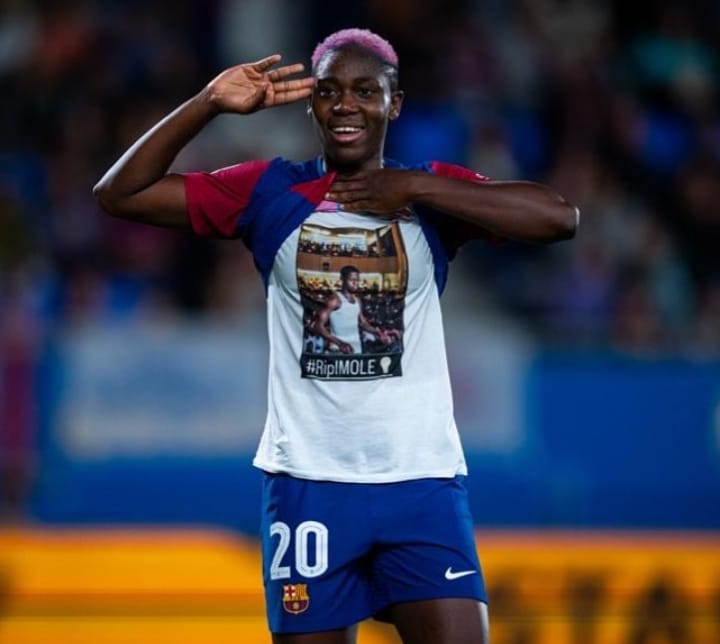

Asisat Oshoala’s name is etched in African football history—not just as a champion, but as a legend whose legacy transcends gender.

For many young African girls who dared to dream of football greatness, she became the blueprint. In the same way boys idolized the likes of Jay-Jay Okocha, Kanu Nwankwo, Didier Drogba, and Samuel Eto’o, Oshoala emerged as the beacon of possibility for aspiring female footballers across the continent.
Her achievements speak louder than any boast ever could. The numbers, the accolades, and the silverware tell a story of dominance, consistency, and influence.
Career Highlights:
6× African Women’s Player of the Year (a record)
5× WAFCON Champion (2nd most in history)
3× UEFA Women’s Champions League Winner
3× La Liga Femenina Champion
3× Copa de la Reina Winner
3× Spanish Supercopa Femenina Champion
2× Chinese Women’s Super League Champion
1× English FA Cup Winner
BBC World Women’s Footballer of the Year (2015)
FIFA U-20 Women’s World Cup Golden Boot & Golden Ball (2014)
Primera División Top Scorer (2021–22)
Chinese Super League Top Scorer (2017)
IFFHS Best Woman Player of the Decade (CAF, 2011–2020)
IFFHS CAF Women’s Team of the Decade & All-Time Dream Team
Queen of The Pitch Award (2014)
And the list goes on.
Oshoala has already certified her place as Africa’s greatest female footballer of all time. But many would argue she belongs in the top 10 greatest African footballers—male or female—ever.
As retirement eventually draws closer, it will spark necessary, even uncomfortable conversations—not about her greatness, which is undisputed—but about how the game and the system have served her, celebrated her, or perhaps fallen short in fully recognising the scale of her contribution.
For now, though, one thing remains clear: Oshoala’s legacy is secure, and her story far from over.
