

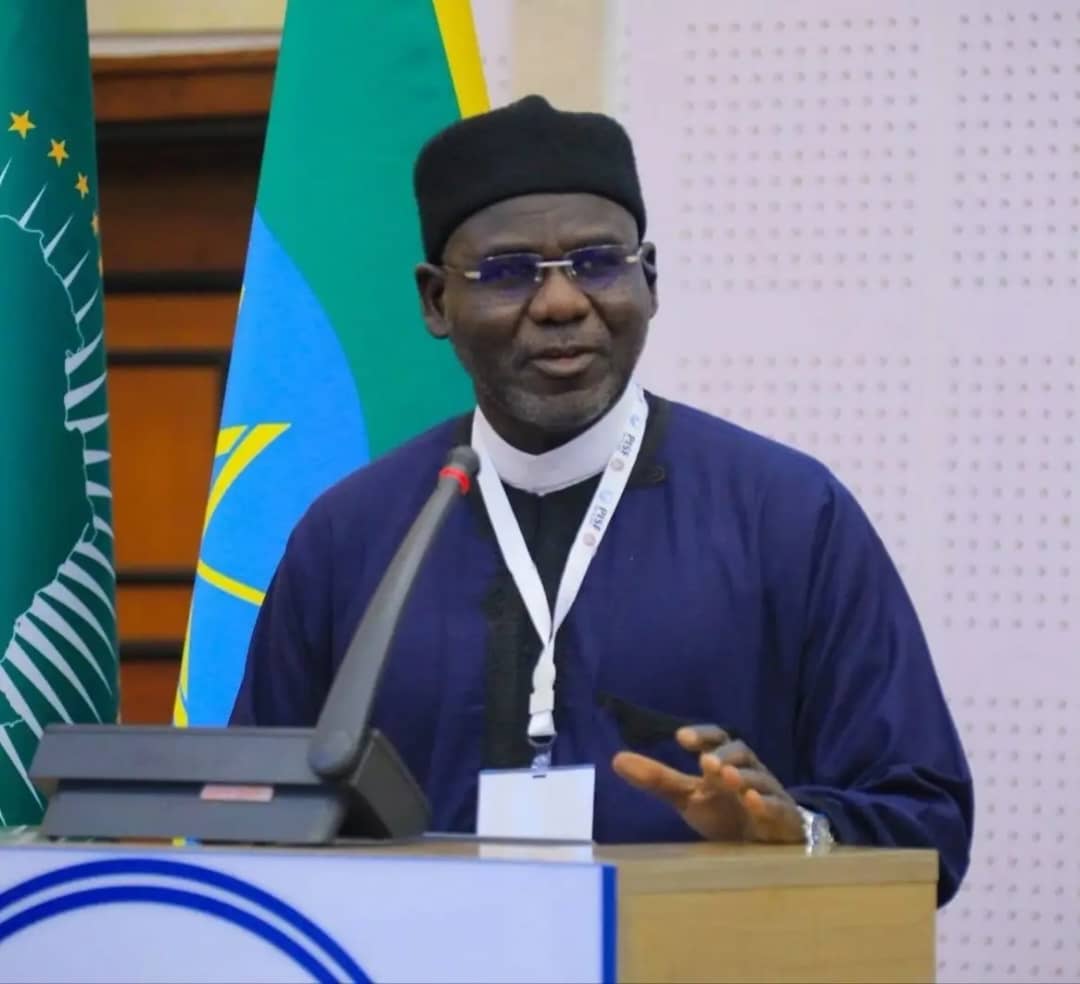
 The upcoming United States District Court proceedings, with a deadline of August 28, 2026, present Nigeria with a profound dilemma. A foreign court sits in judgment over documents allegedly linking President Bola Tinubu to events from over three decades ago. While opposition parties see this as their “last hope of nailing Mr. President politically,” Lieutenant General Tukur Yusuf Buratai (rtd.), former Chief of Army Staff, has courageously reminded Nigerians that the stakes extend far beyond one man or one election.

General Buratai’s position paper, “Nigeria First: A Case for Protecting National Sovereignty and Dignity,” represents a clarion call for national unity at a moment when foreign forces threaten to undermine Nigeria’s collective reputation. This essay defends General Buratai’s patriotic position, urges the opposition to pursue legitimate alternatives that do not sacrifice national dignity, and commends a soldier-statesman who has placed Nigeria’s interests above partisan advantage.
The Buratai Doctrine: Sovereignty Before Partisanship
General Buratai’s argument rests on a fundamental premise: Nigeria is on trial, not Bola Tinubu. When international media reports on a “Nigerian president” embroiled in drug allegations, the world does not distinguish between the man and the nation. It sees Nigeria. It sees a country whose leadership is tainted by scandal.
This is not paranoia; it is the lived reality of how African nations are perceived globally. Once a narrative takes hold—particularly one involving drugs or criminality—it becomes nearly impossible to dislodge. The stigma attaches not to the individual but to the nation, affecting every citizen who travels abroad, every student seeking scholarships, and every entrepreneur seeking investment.
General Buratai has correctly identified that this is not about defending Tinubu the individual; it is about defending Nigeria’s collective dignity. His position is a defence of the principle that foreign courts should not determine the character of Nigerian leaders or the reputation of the Nigerian people.
The opposition’s criticism of General Buratai’s position reveals troubling myopia. By accusing him of “advanced padding” and “stemming the storms,” they have reduced a matter of national sovereignty to partisan political calculation. They see the release of these documents as their “last hope of nailing Mr. President politically” and are willing to sacrifice Nigeria’s reputation on the altar of political ambition.
This is a dangerous miscalculation. If the opposition achieves victory through the humiliation of Nigeria’s sovereignty, they will inherit a nation whose reputation has been irreparably damaged. The opposition fails to understand that Nigeria’s sovereignty is indivisible. You can not attack the president without attacking the office; you can not attack the office without attacking the nation; you can not attack the nation without attacking every Nigerian.
A Call to the Opposition: Explore Legitimate Alternatives
The opposition parties must understand that there are legitimate, honourable, and effective ways to challenge President Tinubu’s candidacy without damaging Nigeria’s national sovereignty and reputation:
1. Domestic Investigative Mechanisms – The opposition should advocate for strengthening Nigerian institutions—the EFCC, ICPC, and National Assembly—to investigate allegations against public officials. This demonstrates respect for Nigerian institutions while holding leaders accountable.
2. Policy-Based Campaigning – The 2027 election should be contested on substantive policy issues affecting everyday Nigerians—unemployment, inflation, insecurity, and infrastructure deficits. A campaign focused on policy alternatives would elevate national discourse.
3. Coalition Building – The opposition should focus on building a broad, issue-based coalition that appeals to Nigerians across ethnic, religious, and regional lines. A united opposition with a compelling vision is far more likely to succeed.
4. Candidate Vetting and Transparency – The opposition should champion comprehensive candidate vetting processes conducted through Nigerian institutions and made public before elections, institutionalizing transparency without foreign interference.
5. Media Engagement and Public Discourse – The opposition should leverage Nigeria’s vibrant media landscape to engage in robust public discourse about leadership, integrity, and national direction through investigative journalism and public debates.
It is with deep admiration that we recognize General Buratai for his extraordinary display of patriotism, courage, and statesmanship. At a moment when partisan passions run high and political opportunism threatens national interest, General Buratai has stood firm in defence of Nigeria’s sovereignty and dignity.
His courage is unmatched. He has demonstrated the courage to speak truth to power—not to protect power, but to protect the nation. In a political climate where every statement is scrutinized for partisan advantage, he has refused to be intimidated by accusations of defending the president.
His fearlessness is exemplary. The opposition parties have attacked him, yet he has not wavered. He has continued to insist on the primacy of national interest. This fearlessness is the mark of a true statesman.
His statesmanship is rare. General Buratai has looked beyond immediate political calculus and considered the long-term implications for Nigeria’s international standing, economic prospects, and democratic sovereignty. Statesmanship is the ability to think in generations rather than elections.
His patriotism is beyond question. Patriotism is not about supporting any particular leader; it is about loving one’s country enough to defend it even when politically inconvenient. General Buratai has defended Nigeria not because it was popular but because it was necessary.
To conclude, the opposition parties have legitimate political ambitions and grievances. They have every right to contest the 2027 presidential election. However, they must understand that the path to power must not be paved with the destruction of national sovereignty.
General Buratai has shown us a different path—one that prioritizes Nigeria’s dignity, sovereignty, and future. He has reminded us that patriotism is not about supporting leaders but about supporting the nation. He has demonstrated that true statesmanship requires the courage to stand for what is right, even when it is unpopular.
Nigerians of all political persuasions must rise to this moment. They must support General Buratai’s vision of a Nigeria that defends its sovereignty, protects its reputation, and refuses to allow foreign courts to determine its destiny.
Let us commend General Buratai. Let us support his vision. Let us unite as Nigerians to defend our sovereignty, protect our dignity, and secure our future.
Dr Hassan Abdullahi
Former Director Army,
Ministry of Defence.