

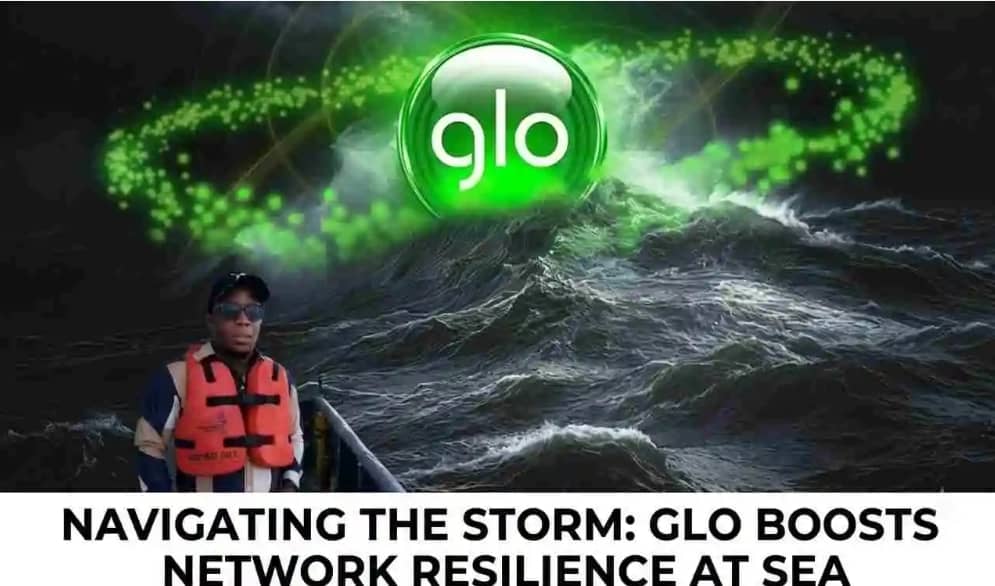

A harrowing maritime crisis off the coast of the Atlantic Ocean has brought the critical importance of offshore telecommunications infrastructure into sharp focus.History

Out in the Atlantic Ocean, when both engines fail and three-storey walls of water threaten to swallow a vessel whole, the distance between life and death is measured in bar lines on a smartphone screen.Business Formation
For 47 offshore oil workers returning from a grueling two-month stint at sea, what was supposed to be a routine crew change turned into a 16-hour fight for survival on Sunday, July 12, 2026. But amid deafening waves, snapped towing lines, and the horrifying prospect of a watery grave, an unexpected element became their ultimate anchor: a persistent cellular signal from indigenous telecommunications giant Globacom (Glo).
Engine Failure in the Open Sea
The ordeal began smoothly enough. By 3:00 p.m., outgoing personnel were lowered via personnel baskets onto the transfer vessel, eager to reunite with their families after weeks of overtime. Just 20 minutes into the voyage, the air was shattered by sudden silence – both of the ship’s engines had cut out.
According to a firsthand account published by a sea chef on the vessel, Chef Tee, the breakdown severed the ship’s onboard communication systems.
As the vessel drifted helplessly in open water, the ship’s primary communication systems went dead. Panic threatened to set in as minutes stretched into hours with no mechanical solution in sight.Technology News
Then came the first break in the dark. Miles off the coast, where dead zones are the norm, workers checked their devices. A Glo network signal was still reaching the vessel. Using that single connection, the crew fired off a distress message that successfully alerted onshore authorities to dispatch a heavy rescue vessel.Engineering & Technology
“This is where I have to appreciate Glo World, because out there in the middle of the Atlantic, GLO happened to be the only network with enough signal to reach the outside world,” recalled Chef Tee, a sea chef onboard. “Since the ship’s communication systems were down, that little network signal became our lifeline.”
Trapped in “Breakwater Point”
The relief was short-lived. By the time the rescue ship arrived at 6:00 p.m., the Atlantic had transformed from a calm surface into a chaotic monster. Six times, rescue crews secured massive steel towing cables to the disabled vessel; six times, the furious ocean snapped them like thread.
Drifting completely out of control, the disabled ship was pulled into “Breakwater Point” – a notorious maritime danger zone where opposing saltwater and freshwater currents collide to create violent, erratic seas.News
By 8:33 p.m., total darkness enveloped the ocean. What followed was sheer terror.
“Then we heard it – a deafening roar, like a giant powerbike charging straight at us,” Chef Tee recounted. “What I saw still gives me chills. A towering white wall of water, easily the height of a three-storey building, was racing towards us.”
The massive wave slammed into the vessel, throwing grown men across the deck as they clung to steel pipes. Wave after wave battered the hull, soaking the crew, cracking heads against metal railings, and sending vomiting, terrified workers into fervent prayers. Standard life jackets felt useless against the Atlantic ocean that threatened to capsize the ship at any moment.
A Ray of Hope Across the Atlantic Waves
With limbs shaking uncontrollably and water crashing overhead, workers faced the very real possibility that they would never see their children again. In what felt like their final moments, Chef Tee pulled out his phone, expecting a blank screen.
Instead, through the sea spray and storm, the faint Glo signal was still holding on.
That bar of signal became a emotional beacon. He quickly typed out SOS messages to his wife and siblings, leaving instructions on how to care for his children if he didn’t make it back. Seconds later, the phone rang in his hand.
Through the roaring wind, the voices of his wife and family pierced the dark: “Nobody will take care of your children except you. You’re coming home.”
Across the deck, as drillers wept and prayed, those brief, clear connections provided the psychological strength needed to keep holding onto the railings through hours of battering rain and brutal waves.
Safe Shoreline
By 11:45 p.m., the vessel finally managed to clear the breakwater trap. Slowed to a crawl and soaked through, the ship was towed through heavy rainfall for the remainder of the night. At 7:00 a.m. the following morning- nearly 16 hours after setting sail – the vessel touched the dockyard gates.
While all 47 workers walked away alive, the incident leaves a profound lesson for the West African offshore sector. In maritime operations, coverage area is not just a commercial metric – it is emergency infrastructure.
Globacom’s deep offshore network reach didn’t just transmit data that night; it routed the distress calls that dispatched the rescue and provided 47 men the hope they needed to survive the longest night of their lives. With the ship’s primary communication systems disabled, the workers relied on network connectivity provided by indigenous telecommunications operator Globacom (Glo) to issue distress calls and maintain life-saving contact with rescue teams and family members.